
Research
Triathloncoach is grounded is science. We like to share ground-braking research in the field of training, coaching and exercise physiology.
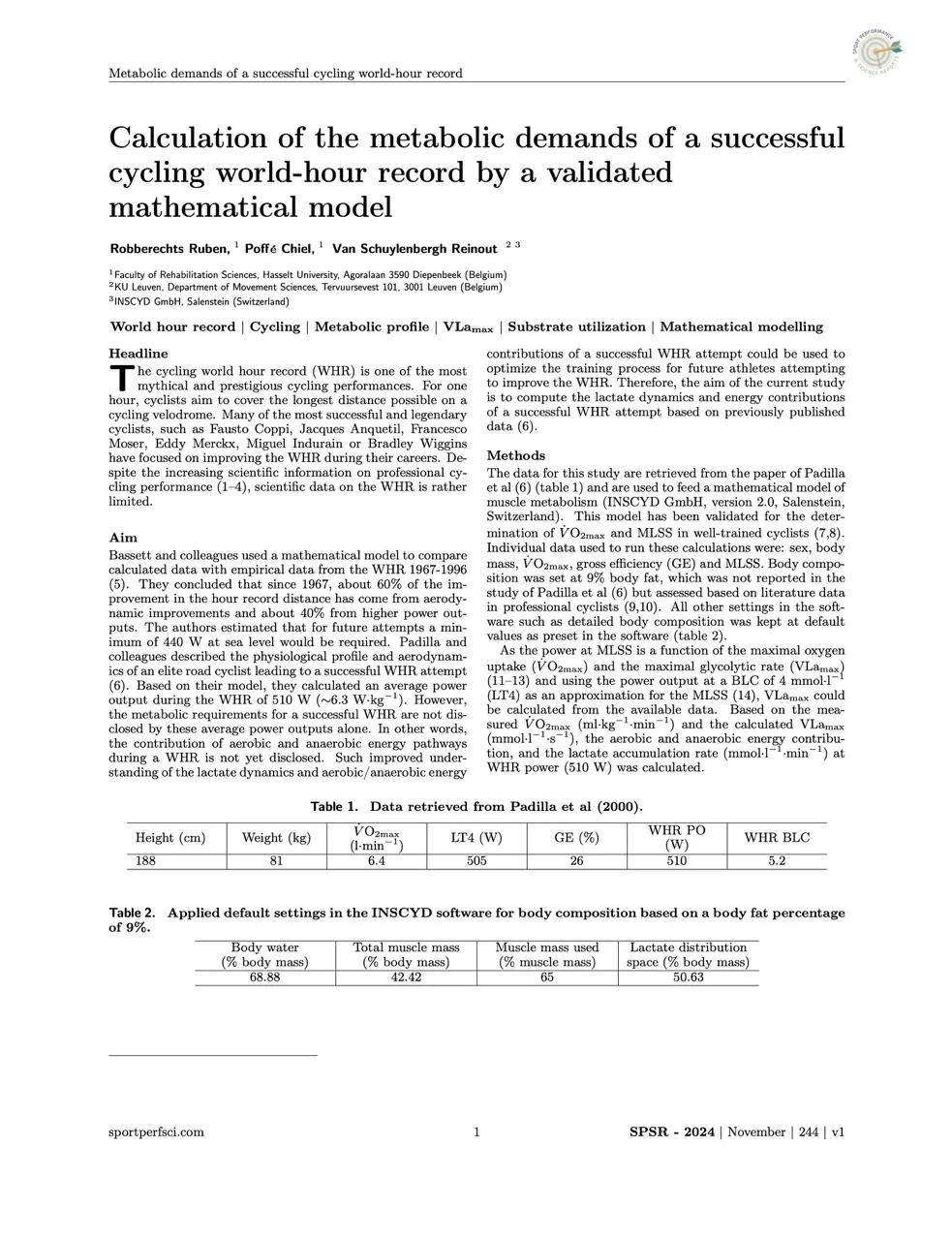
Metabolic demands of World hour record
The cycling world hour record (WHR) is one of the most mythical and prestigious cycling performances. For one hour, cyclists aim to cover the longest distance possible on a cycling velodrome. Many of the most successful and legendary cyclists, such as Fausto Coppi, Jacques Anquetil, Francesco Moser, Eddy Merckx, Miguel Indurain or Bradley Wiggins have focused on improving the WHR during their careers.
In this study, Reinout Van Schuylenbergh investigated the world hour record of Miguel Indurain based on the data published by Padilla et al (2000). He used a mathematical model (INSCYD) to calculate the metabolic profile, substrate utilization and lactate dynamics during the successful world hour attempt. This became a story of big numbers and is summarized below:
High VO2max (79 ml O2 / min / kg)
High efficiency (GE 26%)
Vlamax 0.38
MLSS 505 Watt
Lactate concentration (calculated) at the world hour record: 4.4-4.9 mmol/l
Do you like to learn more?
Link to the full text.
Feel free to contact us if you have questions about this blog post.
FTP ≠ MLSS
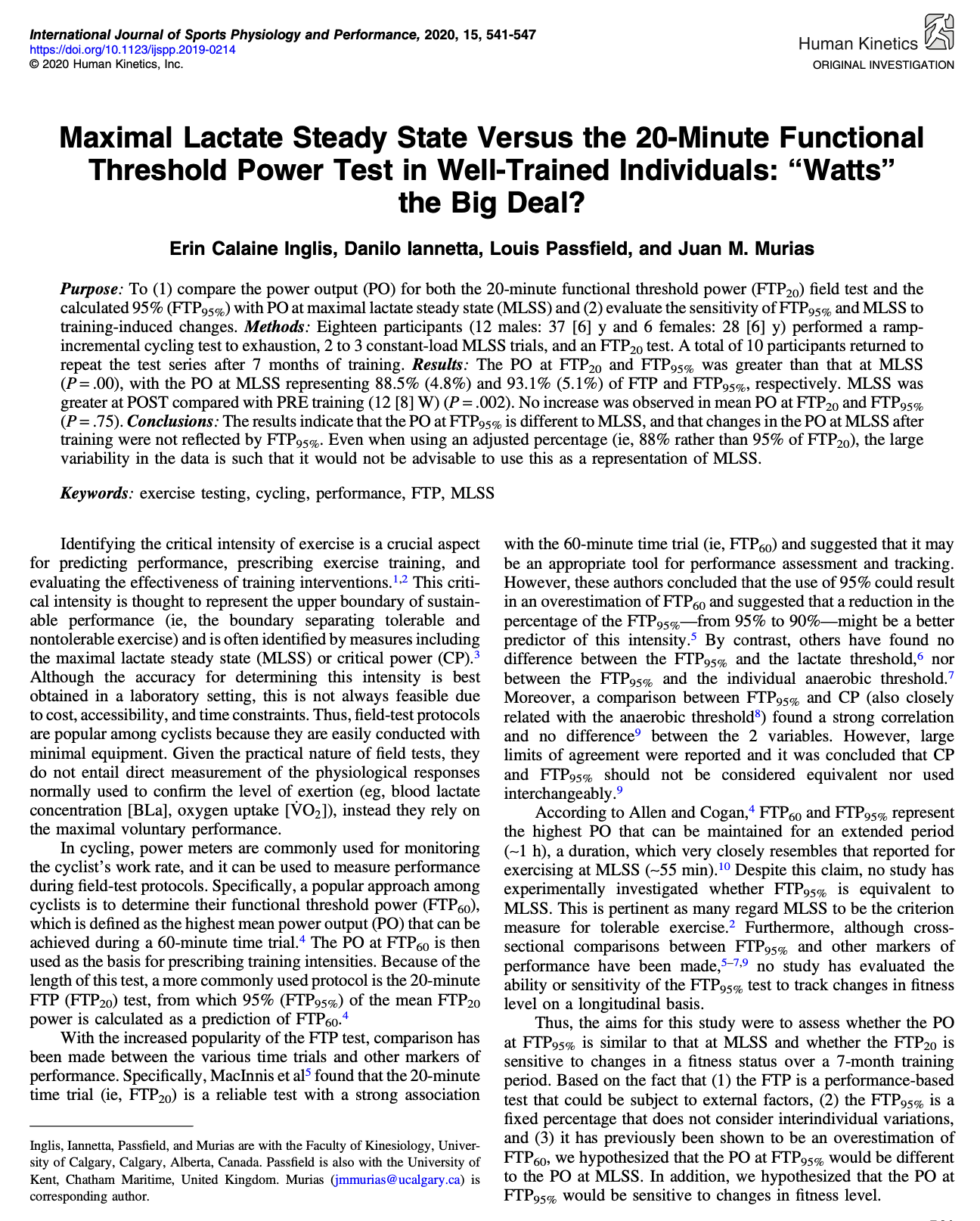
Identifying the exercise intensity at maximal lactate steady state (MLSS) is a crucial aspect for predicting performance, prescribing exercise training, and evaluating the effectiveness of training interventions. In cycling and triathlon, a popular approach is to determine this exercise intensity by testing their functional threshold power (FTP), which can be easily performed in field conditions.
The question remains if FTP is a valid test to assess MLSS and can be used interchangeably.
Validity research
Inglis and colleagues investigated this question. They performed a validation study investigating the validity of FTP in a training context. They observed high correlations between FTP and MLSS (r: 0.96) in a sample of 18 trained and well-trained subjects. FTP overestimated MLSS with 20-30 watts, depending on the applied FTP method.
The correlation between FTP and MLSS was deteriorated dramatically after the training intervention. FTP didn't change after the training intervention, whereas MLSS was significantly increased.
What can we learn from this study?
FTP overestimates MLSS
FTP is less sensitive than MLSS to capture training adaptations.
Do you like to learn more?
Feel free to contact us if you have questions about this topic.
Link to the scientific publication.
Can a world class junior beat a multiple grand tour winner?
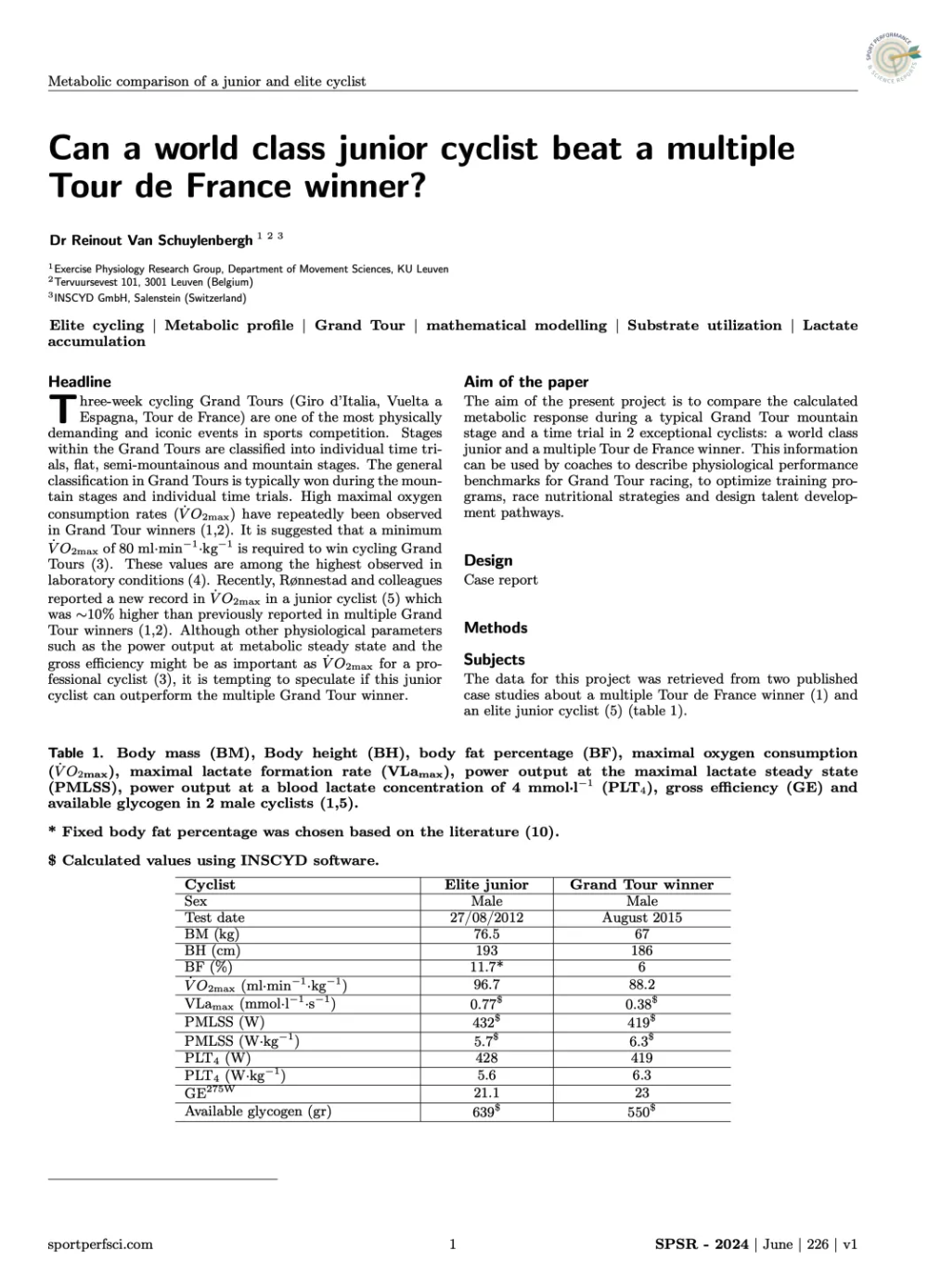
Three-week cycling Grand Tours (Giro d’Italia, Vuelta a Espagna, Tour de France) are one of the most physically demanding and iconic events in sports competition.
VO2max > 96 ml·min−1·kg−1
The general classification in Grand Tours is typically won during the mountain stages and individual time trials. It is suggested that a minimum VO2max of 80 ml·min−1·kg−1 is required to win cycling Grand Tours. Recently, Rønnestad and colleagues reported a new record in VO2max in a junior cyclist achieving an astonishing 96 ml·min−1·kg−1. Although other physiological parameters such as the power output at metabolic steady state and the gross efficiency might be as important as VO2max for a professional cyclist, it is tempting to speculate if this junior cyclist can outperform a multiple Grand Tour winner.
Junior beats the elite?
This study investigated the performance capacity in 2 exceptional cyclists in an individual time trial and a mountain stage. Calculations of cycling power were performed using a validated mathematical model and the physiological response was assessed by an advanced model of muscle physiology (INSCYD). Despite the extreme aerobic power of the junior cyclist, he could not create a competitive advantage over the elite cyclist due to a lower cycling economy and too high anaerobic power (Vlamax).
What can be learned from this study?
These results demonstrate that to understand exercise performance a full metabolic profile should be analyzed. Not only the maximal power of aerobic and anaerobic metabolism determines performance, but also substrate utilization and lactate dynamics. In this case study, it was clear that the multiple GT winner would outperform the junior due to a better developed fat metabolism and glycogen sparing.
How can I get a metabolic profile?
Feel free to contact us if you have questions about this study or how you can have your personal metabolic profile tested.
Link to the full-text
Reliability 15s sprints
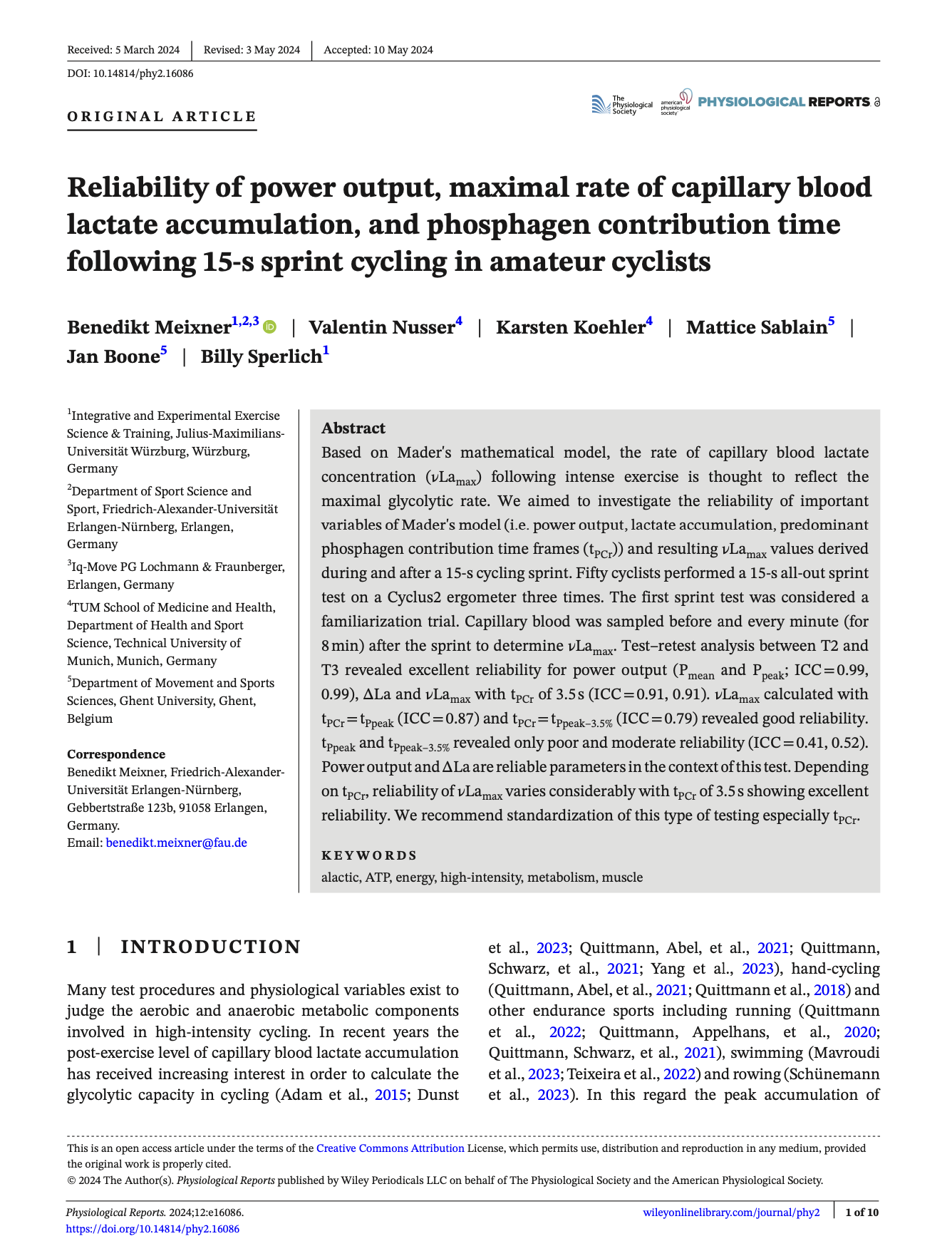
Recently, the interest for testing the athlete's glycolytic power has increasing in the coaching community and academia. Based on Mader's mathematical model, the rate of capillary blood lactate formation (VLamax) following a maximal exercise bout is thought to reflect the maximal glycolytic power. For this purpose, a sprint test has been developed by Weber (2003) and has been (partly) replicated in later studies by several research groups.
Reliability research
Before assessing the validity of a test (if the test is reflecting real world conditions), reliability should be investigated. Most studies found high levels of test-retest reliability for cycling power output and lactate concentration, both important metrics to calculate the VLamax. However, approximation of the alactic energy contribution (from PCr) is difficult and impacts on VLamax reliability.
It should be noted that testing equipment and ergometer settings influence the test results and VLamax calculations. This has been nicely demonstrated in the study of Harnish et al (2023) using a consumer range ergometer and handheld lactate analyzer. Their data revealed only moderately reliable power, lactate and VLamax data. Meixner and colleagues (2024) performed a similar study, with lab accurate equipment. Their data showed very high reliability in power, lactate and VLamax data.
What can we learn from these studies?
Not all 15s sprints are suitable to assess VLamax.
Lab accurate equipment is needed to assess VLamax if you apply the methodology described by Meixner et al (2024)
Testing rigor, including a standardized test protocol, is needed to become valid VLamax assessments.
Do you like to learn more?
Feel free to contact us if you have questions about this topic.
Link to the full-text
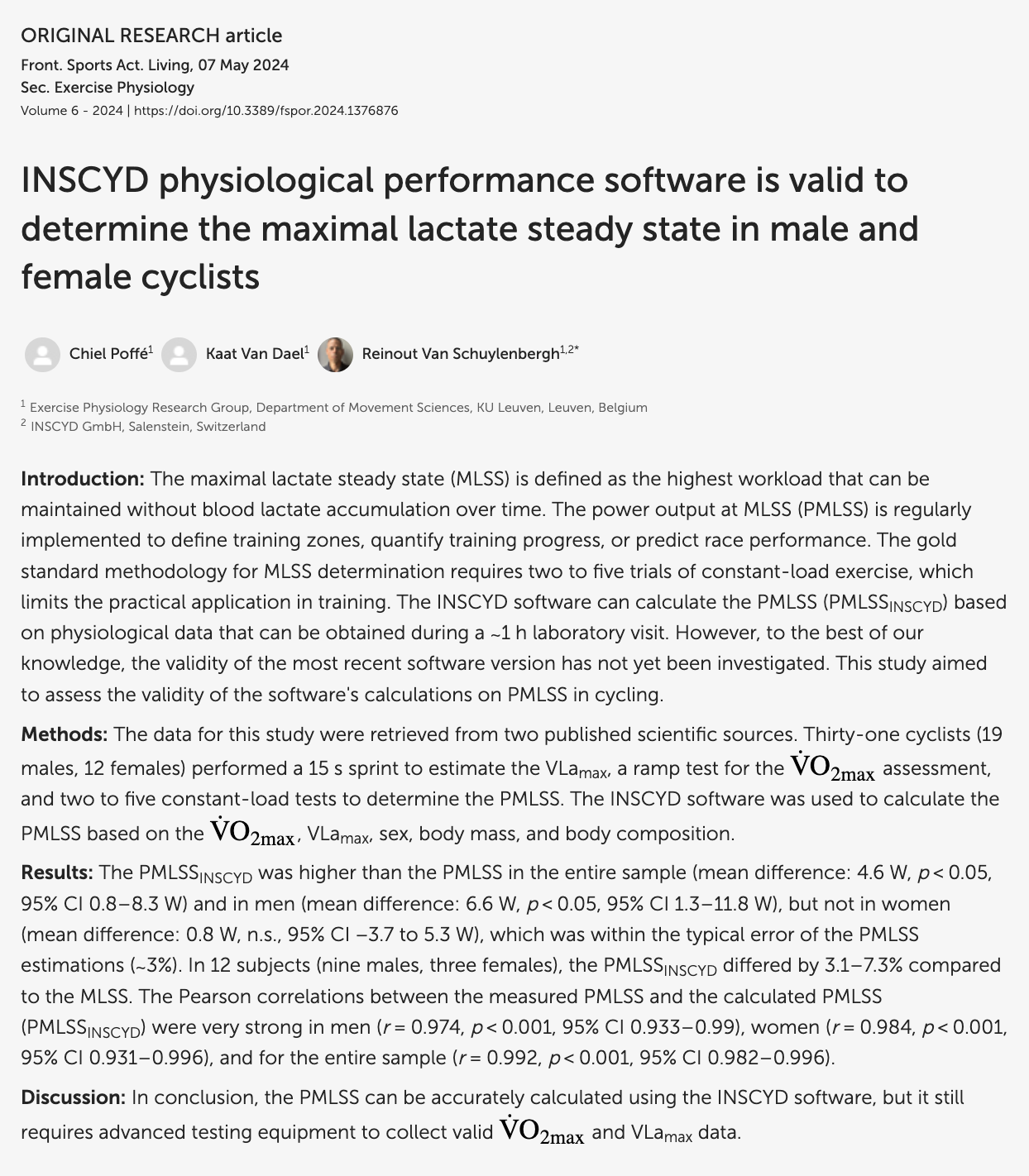
INSCYD calculates valid MLSS
The maximal lactate steady state (MLSS) determines the highest exercise intensity in lactate (metabolic) steady state. This physiological characteristic is important for performance prediction, design training programs or training zones. The golden standard method to determine MLSS requires 2-5 tests on separate test occasions and is a costly and time consuming procedure.
Independent scientific research
This independent scientific study investigated the accuracy and validity of INSCYD athletic performance software to determine the MLSS in cycling from a classic VO2max and sprint test. The study showed high accuracy of the software in calculating the cycling power at MLSS, in both male and female subjects.
Why should I care?
These results demonstrate that INSCYD offers a practical way to determine MLSS accurately, among other physiological metrics. This information can be used in a data-informed coaching approach to design more effective training programs, training zones and pacing strategies. The results are valid for both male and female athletes.
How can I get a metabolic profile?
Feel free to contact us if you have questions about this study or how you can have your personal metabolic profile tested.
Link to the full-text
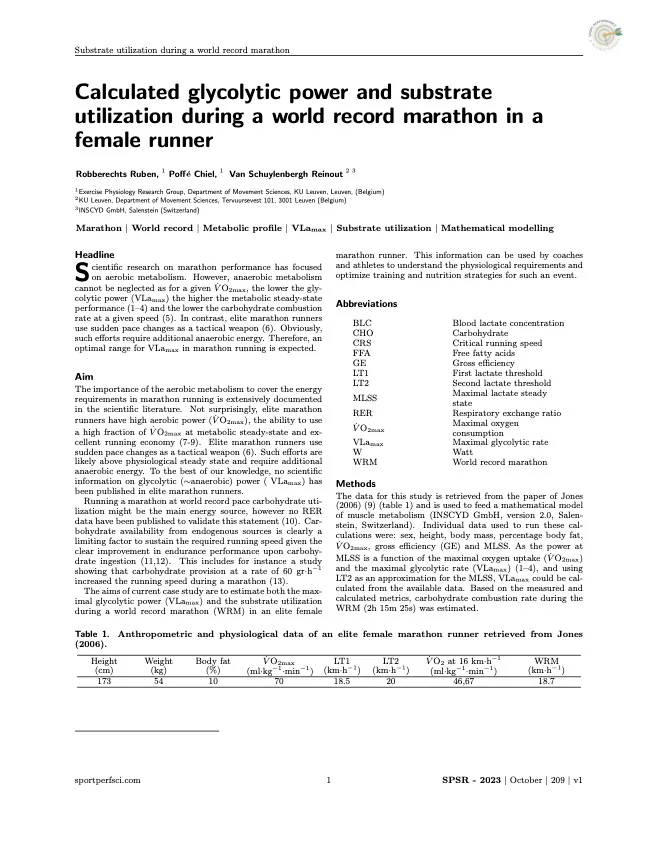
Substrate utilization during marathon
The importance of the aerobic metabolism to cover the energy requirements in marathon running is extensively documented in the scientific literature. Elite marathon runners use sudden pace changes as a tactical weapon. Such efforts are likely above physiological steady state and require additional anaerobic energy. To the best of our knowledge, no scientific information on glycolytic (∼anaerobic) power ( VLamax) has been published in elite marathon runners.
Running a marathon at world record pace carbohydrate utilization might be the main energy source. However no such data exists in elite marathon runners.
How they approached the problem
The data for this study is retrieved from the paper of Jones (2006) and is used to feed a mathematical model of muscle metabolism (INSCYD). The authors modelled the world record marathon of Paula Ratcliff (2014) and calculated the following data:
VO2max: 70 ml/min/kg
Vlamax: 0.31 mmol/l/s
Carbohydrate utilization during marathon: 150 gr/h (338 gr for the marathon)
What can we learn from this information?
Elite marathon running requires a high aerobic power and running economy. Glycolytic power should be balanced to allow pace changes, without compromising fat utilization and the running speed at metabolic steady state.
Link to the full-text.
